
Overview

Nintendo Switch Repair

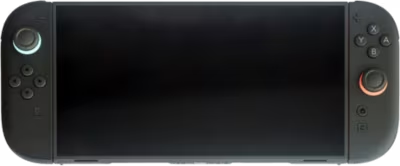
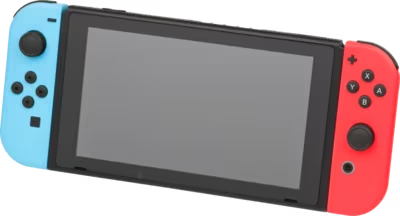
Nintendo Switch repair at Brentworth covers the Switch, Switch OLED, Switch Lite, and Switch 2. The Switch family's hybrid handheld-and-home design creates a specific set of hardware stresses that differ from dedicated home consoles — the USB-C charging port cycles daily through portable and docked use, the screen and rails are handled constantly, and the console is carried in bags and pockets where impacts and moisture exposure are routine.

USB-C charging port damage is the most common Switch repair submission at Brentworth. The port takes wear from repeated daily connection cycles, and damage ranges from a port that charges intermittently or only at a specific angle through to complete charging failure and dock connectivity loss. Joy-Con faults — both the notorious analog stick drift and physical rail or connector damage — are the second most common category. Screen damage, no-power conditions, and dock-related faults round out the typical repair picture.

Brentworth handles Nintendo Switch mail-in repairs nationwide. Describe the specific console model, the fault, and any relevant history in the intake form.

Ready to start?

Use the intake form to describe the device, the fault, and the result you want. The more specific you are, the easier it is to give you a useful answer.

Start Repair
Models we repair

Choose your model

Select your Switch model for fault-specific information and repair details.

Common Issues

What we fix

USB-C charging port damage and no-charge faults

The USB-C port on the Switch is the single most stressed connector on the console. Daily charging cycles, inserting and removing from the dock, carrying while charging, and cable insertions at varied angles all contribute to mechanical wear. The port can develop damaged pins, loose mounting from solder joint fatigue, or bent internal contacts — producing charging that only works at a specific angle, intermittent charging, no charging at all, or a dock that no longer outputs to the TV. USB-C port replacement is one of the most common Nintendo Switch repairs across all models.

Joy-Con analog stick drift and connection faults

Joy-Con analog stick drift — where on-screen movement continues without touching the stick — became one of the most widely reported hardware issues in Nintendo's history. The fault is typically caused by wear on the potentiometer contacts inside the stick module, and on most affected units the module eventually needs replacement. Separate from drift, Joy-Con rail damage from repeated attachment and removal, worn locking tabs, and damaged ribbon cable connectors between the Joy-Con and the main console are also common repair cases.

Screen damage, digitizer faults, and display issues

The Switch and Switch OLED display is exposed during handheld use and can sustain damage from drops, pressure in a bag, or contact with hard objects. Cracked screens, dead zones in the touchscreen digitizer, and pressure marks from a closed case are common. The Switch OLED uses an OLED panel that differs from the Switch and Switch Lite LCD panels in its display properties and replacement process. Screen damage is one of the more costly repairs on the Switch family given the screen's central role in handheld play.

No power and failure to charge

A Switch that shows no response to the power button and does not charge from any cable may have a failed charging port, a depleted battery that needs an extended charge to recover, a blown fuse or power management IC on the board, or liquid damage that has reached the charging circuit. The distinction between a port fault and a board-level charging fault requires physical inspection — both can produce the same no-charge symptom, but only one requires board-level work.

Common Questions

Frequently asked questions

Which Nintendo Switch models does Brentworth repair?

Brentworth accepts mail-in repair requests for the Nintendo Switch (2017 and revised HAC-001(-01) models), Switch OLED, Switch Lite, and Switch 2. Select the specific model below or describe the console and fault in the intake form.

What are the most common Nintendo Switch repair faults?

USB-C charging port damage and no-charge faults are the most common Switch repair submissions at Brentworth. Joy-Con analog stick drift and rail damage are the second most common category. Screen damage from drops or bag pressure, no-power conditions, and dock-related faults are also frequent. The Switch 2's magnetic Joy-Con attachment changes the nature of some connection faults compared to earlier models.

Is there a diagnostic fee for Nintendo Switch repair?

Yes. Brentworth charges a non-refundable diagnostic fee that is credited toward the repair cost if you choose to proceed. The fee covers physical inspection, bench testing, and a written assessment of the fault. For no-charge cases, the diagnostic process distinguishes between a port fault and a board-level charging fault before any repair is quoted.

How do I pack and ship my Nintendo Switch safely for mail-in repair?

Remove the Joy-Cons and any game card from the console before shipping. Do not include the dock, power adapter, or cables — send the console body only unless the dock itself is part of the fault. Wrap the console in bubble wrap or foam and pack it in a snug box with no room to shift. Use a tracked, insured shipping service and include your intake reference number inside the package.

Ready to start?

Use the intake form to describe the device, the fault, and the result you want. The more specific you are, the easier it is to give you a useful answer.

Start Repair

Related services

common repairs

Game Consoles

PS5, Xbox, and Nintendo Switch repair for HDMI failures, charging faults, no power, overheating, and deeper hardware diagnosis.

View all services